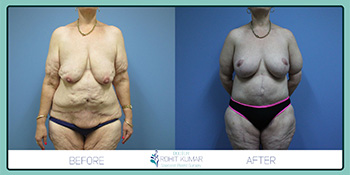
Understanding Body Contouring
Body contouring surgery is a term for a range of surgical procedures designed to reshape the appearance of the body. These surgeries are often sought after significant weight loss, pregnancy, or ageing, which can leave excess skin and stubborn fat that does not respond to diet and exercise.
The purpose of body contouring is to address changes in the body following weight fluctuations, surgery, or other factors. By removing excess skin and fat, these procedures adjust the body’s shape and structure according to the patient’s individual anatomy.”
There are many methods that patients use to achieve massive weight loss. Some patients may reach their goal weight through diet and exercise, while many have needed further support via bariatric surgery. No matter what path you take, the journey can be quite a challenging experience, and your success in achieving your weight loss is to be celebrated, and you are to be congratulated on this achievement.
It is important to understand that even with surgery, there are no quick fixes” to body contouring after massive weight loss. The physical and psychological benefits take time. Just as it takes a person anywhere from six to nine months and sometimes even more to achieve their goal weight, it can take a similar period to remove all the excess skin.
What causes excess skin?
Our skin is a living, dynamic organ that expands as we gain weight. When that weight is lost, the skin’s ability to retract is limited, and for many people, it does not tighten enough to match their new body shape. This is influenced by several factors:
- Degree and duration of weight gain:
The longer the skin has been stretched, and the greater the amount of weight gained, the harder it is for the skin to return to its former position. - Skin elasticity:
Natural elasticity varies from person to person. Ageing, genetics, and lifestyle factors (such as sun exposure or smoking) can reduce elasticity over time. - Location of the excess skin:
Areas like the abdomen, arms, thighs and back often struggle to “snap back” because the skin has been stretched tightly over underlying fat for an extended period. - Muscle and connective tissue changes:
In the abdominal area, weakened abdominal muscles and stretched connective tissue can contribute to a looser appearance, even after the fat has been lost. - Rate of weight loss:
Rapid weight loss, whether through lifestyle changes or bariatric surgery, can leave the skin with insufficient time to gradually adjust.
Together, these factors mean that even with significant effort and lifestyle changes, excess skin is often unavoidable, particularly after major weight loss.
Common Body Contouring Procedures
Various parts of the body can be addressed through body contouring surgery, each targeting specific problem areas. The breast, abdomen, and lower legs are the main areas of concern.
1. Breast Procedures
Common procedures include:
- Breast Reduction surgery helps alleviate discomfort such as back, neck, and shoulder pain by removing excess breast tissue and skin. The procedure also adjusts the size and position of the breasts to suit the patient’s individual anatomy.
- Breast Lift (Mastopexy) is a surgical procedure that removes excess skin and tightens surrounding tissue to adjust the position of the breasts. It can be performed after changes due to weight fluctuations, pregnancy, or natural aging.
- Breast Augmentation is a surgical procedure that can alter the size and shape of the breasts. Treatment plans are personalised to suit each patient’s body and surgical considerations.
- Fat Grafting, or fat transfer, is a surgical procedure in which fat is taken from one area of the body and injected into another. It can be used to adjust volume or contour in areas such as the breasts, buttocks, or face, using the patient’s own tissue.
2. Abdomen and Arm Procedures
Common procedures include:
- Body lift, also known as a belt lipectomy, is a surgical procedure that removes excess skin and fat from multiple areas of the body, typically including the abdomen, thighs, buttocks, and sometimes the lower back. The procedure adjusts the body’s shape by removing and repositioning tissue according to the patient’s anatomy.
- Abdominoplasty (tummy tuck) is a surgical procedure that removes excess skin and fat from the abdomen and tightens the abdominal muscles. It can be considered following pregnancy or significant weight changes to adjust the position and structure of the abdominal area.
- Monsplasty is a surgery designed to address changes in the mons pubis area by removing excess skin and fat. It is performed according to the patient’s individual anatomy.
- Back lift, also known as an upper body lift, is a surgical procedure that removes excess skin and fat from the upper and mid-back. The procedure is tailored to the patient’s anatomy and may be considered following significant weight changes or as part of a broader body contouring plan.
- Brachioplasty is a surgical procedure for removing excess skin and fat from the upper arms. The procedure adjusts the tissue according to the patient’s individual anatomy and may be considered following weight changes or ageing.
- Liposuction is a surgical technique that removes fat from targeted areas of the body, including the abdomen, thighs, hips, buttocks, and arms. Treatment plans are personalised and can be combined with other procedures if appropriate.
3. Thigh Contouring
Common procedures include:
- Inner Thigh Lift: Inner thigh lift is a surgical procedure that removes excess skin and fat from the inner thighs. Incisions are placed within natural creases to reduce visibility.
- Liposuction: Liposuction removes fat from the thighs. When performed alongside a thigh lift, it can address multiple areas of tissue and skin in a single procedure.
Inner Thigh Lift in Detail
An inner thigh lift, or medial thigh lift, is a surgical procedure that removes excess skin and fat from the inner thigh area. The procedure may be considered following weight changes, ageing, or due to genetic factors. Incisions are placed along the inner thigh in natural skin creases to reduce visibility, and excess tissue is removed according to the patient’s anatomy.
Inner thigh lift surgery addresses excess skin and fat in the inner thigh region, which can occur after weight fluctuations or with ageing. It may be combined with liposuction to adjust tissue distribution in multiple areas.
Patients undergoing an inner thigh lift may experience reduced irritation or friction in the inner thigh area. The surgery removes excess skin and fat and is tailored to the patient’s individual anatomy.
Common complaints from excess skin include:
- Empty, breasts that no longer fill a bra.
- Sweating under the skin folds, particularly in the summer months, that is difficult to control or reduce.
- Skin infections and rashes, particularly in these folds.
- Chafing and rubbing, especially in the inner thighs but also in other areas where there is loose skin.
- Difficulty finding clothing that fits well
Dr Kumar, a fully qualified and accredited specialist plastic surgeon, focuses on procedures for patients who have undergone significant weight loss. He applies a range of surgical techniques to address excess skin and tissue, supporting each patient’s functional and reconstructive needs following weight changes.
Am I a Candidate for Body Contouring Surgery?
Body contouring after weight loss is one of the most complex surgeries performed by plastic surgeons. Not only are there significant technical considerations, but there are also important patient considerations. For these reasons, surgery should only be undertaken when all factors are optimised.
From a patient’s point of view, the minimum requirements before undertaking body contouring surgery include:
- You have achieved your goal weight and have maintained it for a minimum of 3–6 months.
- You are otherwise reasonably fit and well, with no major medical problems, and have clearance from your GP to undergo a major operation.
- You are a non-smoker, or you have ceased smoking for a minimum of 12 weeks before and 12 weeks after surgery, including nicotine of any type/source and e-cigarettes.
- Good wound healing is essential for body contouring surgery, so you should have a healthy diet and optimal nutrition. Protein levels, iron, vitamin B12, and folate are particularly important and should be within the recommended range before surgery.
- The journey to and after body contouring surgery can be emotional, so it is important to have strong social support from friends and family, and a reliable support structure during your recovery.
Dr Kumar and his team can assist you in meeting these requirements and optimising your health to help ensure your surgery and recovery are as smooth and safe as possible.
Are you ready to book in with Dr Kumar?

The Procedure: What to Expect
If multiple areas of the body require treatment, Dr Kumar often stages surgery after weight loss in Sydney. Procedures are tailored to your individual needs, recognising that outcomes vary for each patient.
Several factors guide the selection of procedures, including recovery compatibility and overall surgical duration, which typically ranges from 4 to 10 hours. This staged approach helps minimise risks during surgery and allows consideration of financial factors when combining treatments.
A Typical Series of Procedures
Operation 1: Body Lift including monsplasty and Breast Surgery (Stage 1)
Minimum recovery: 6 months if Stage 2 breast surgery is required.
Operation 2: Arm Lift and Breast Surgery (Stage 2, only if required)
Minimum recovery: 3 months.
Operation 3: Thigh Lift (Stage 3, only if required)
On average, most patients require three operations and approximately 12 months to achieve their post-weight loss body when addressing all three common areas of concern.
Please follow the links on this page to find more specific details on the different types of surgery available following weight loss.
Risks and complications
All surgical procedures carry risks. Body contouring surgery after significant weight loss is no exception, and outcomes can vary between individuals.
Potential risks and complications may include:
- Bleeding or haematoma
- Infection
- Delayed wound healing or wound breakdown
- Seroma (fluid accumulation)
- Scarring, including thickened or widened scars
- Changes in skin sensation, including numbness or altered sensation
- Swelling, bruising or discomfort during recovery
- Asymmetry or contour irregularities
- Blood clots, including deep vein thrombosis or pulmonary embolism
- Risks associated with general anaesthesia
Patients who have experienced massive weight loss may have an increased risk of wound-related complications, particularly when multiple areas are treated or when underlying health or nutritional factors are present.
A thorough consultation is essential to discuss individual risk factors, expected recovery, and whether body contouring surgery is appropriate for you. Your surgeon will explain the potential risks and complications in detail as part of the informed consent process.
Download our Body Contouring After Massive Weight Loss Guide
This complete guide to Body Contouring Surgery covers everything you need to know about this procedure, including:
- Body Contouring Surgery Explained
- How to assess if you are a good candidate
- The Body Contouring Surgery Process
- Answers to our most frequently asked questions
Costs and Consultation
As there are multiple possible combinations of surgery, which are usually staged over time, the most accurate way to get a quote is to consult with Dr Kumar. Together, you can plan your surgery and determine the appropriate costs.
After your initial consultation, you will receive a detailed, itemised quote. This includes Dr Kumar’s fee, Anaesthetist fee, Surgical Assistant fee, and hospital fees.
We can also provide information on body contouring surgery in Sydney and available payment plans.
Included in Your Fees
- Procedure performed by a fully qualified specialist plastic surgeon
- Mentor brand breast implants (if required)
- Anaesthetic fees
- Procedure performed in a fully accredited private hospital
- All necessary garments
- Post-operative follow-up for up to 12 months