

Every operation carries risk. This page explains the complications that can occur after plastic surgery, roughly how often they happen, who is at higher risk, and what Dr Kumar’s team does to reduce them.
In short: Most people recover from plastic surgery without a serious problem, but complications do happen and some are common. After body contouring following major weight loss, fluid collections (seroma) and small areas of wound separation are common and usually managed in the rooms. Serious complications such as blood clots are rare. Nicotine in any form, a higher BMI, poorly controlled diabetes and poor nutrition all raise your risk. Your own risks, and the risks of your specific operation, are discussed in detail before you decide, and there is a cooling-off period of at least seven days before you can book surgery.
How common are complications?
This page uses the same four terms throughout.
| Term | What it means |
|---|---|
| Expected | Happens to almost everyone and settles with time |
| Common | More than 1 in 10 people |
| Uncommon | Between 1 in 100 and 1 in 10 people |
| Rare | Fewer than 1 in 100 people |
These are general bands drawn from published studies. Your own risk depends on your health, your weight history and the operation you are having, and Dr Kumar will go through it with you.
Risks of any operation
| Risk | How often | What it means and what is done |
|---|---|---|
| Bruising and swelling | Expected | Bruising settles over a few weeks. Swelling can take several months to settle fully; the compression garment helps. |
| Changes in sensation | Common | Numbness around the scars usually improves over months. A small patch can stay numb permanently. |
| Seroma (fluid collection) | Common after body contouring; uncommon after other operations | Drains and the garment reduce the risk. A seroma is usually drained with a needle in the rooms, sometimes more than once. More on seroma. |
| Wound-healing problems | Common after body contouring; uncommon after other operations | Usually a small area of separation, often where two incisions meet. Dr Kumar’s nurses manage it with dressings; it can add a few weeks to healing. |
| Infection | Uncommon | Antibiotics are given at the time of surgery. An infection is usually treated with antibiotics and occasionally needs drainage. |
| Bleeding (haematoma) | Uncommon | A collection of blood under the skin, most often in the first 24 hours, which can need a return to theatre. Blood-thinning medicines and supplements are stopped beforehand to reduce it. |
| Scarring | Every operation leaves scars; thick or widened scars are uncommon | Scars take 12 to 18 months to mature. Scar care starts once the dressings come off at six weeks. Scars after skin removal surgery. |
| Fat necrosis | Uncommon | Firm lumps where fat has lost its blood supply. Most soften over months; a few need treatment. |
| Skin or nipple loss (necrosis) | Rare; more likely in people who use nicotine | An area of skin, or the nipple, loses its blood supply. It may need dressings over several weeks or further surgery. |
| Blood clots (DVT and PE) | Rare | A clot in the leg (DVT) can travel to the lungs (PE), which can be life-threatening. Your clot risk is assessed before surgery and prevention is matched to it, including walking early, compression and, where your risk warrants it, blood-thinning medication. |
| Anaesthetic complications | Rare | Including reactions to medicines and breathing problems. A specialist anaesthetist assesses you before surgery. |
| Result not as hoped | Uncommon; more likely after major weight loss | Asymmetry, irregular contours or remaining loose skin. Some patients choose a revision; any further operation has its own risks. |
Serious complications, including death, are very rare in healthy patients having surgery in accredited hospitals, but no operation is free of risk. Each procedure page on this site also lists the risks specific to that operation, and you will receive written information about your own operation before you decide.
Risks after major weight loss
Body contouring after major weight loss carries more risk than cosmetic surgery of the same name. The operations are longer (a body lift takes five to six hours), more skin is removed, the wounds are longer, and the tissue has often been stretched for years. Nutrition can also be lower after bariatric surgery or rapid weight loss, which slows healing.
The published figures reflect this. In one series of 323 lower body lifts after bariatric surgery, 42% of patients had at least one complication, most often a seroma (35%). Older age and tobacco use were both linked to more complications (Losco and colleagues, Aesthetic Plastic Surgery, 2020). Most complications after body contouring are minor and managed in the rooms, but they can add weeks to your recovery, and it is better to plan for that than to be surprised by it.
Combining several operations in one sitting means a longer anaesthetic, so larger plans are often staged. Combining procedures after weight loss explains how that decision is made, and body contouring after weight loss covers each operation.
Breast surgery and implants
Breast reduction and breast lift
Small areas of wound separation, usually where the vertical and horizontal scars meet, are common. Changes in nipple sensation are common and can be permanent. Breastfeeding may be affected. Loss of part or all of the nipple is rare and more likely in people who use nicotine.
Breast implants
- Capsular contracture (uncommon): scar tissue tightens around the implant and can make the breast firm or misshapen.
- Rupture or replacement: implants are not lifetime devices, and further surgery during your life is likely.
- BIA-ALCL (rare): a type of lymphoma linked mainly to textured implants. The Therapeutic Goods Administration keeps current information in its breast implant hub.
- Breast implant illness: some people report symptoms they attribute to their implants. More on breast implant illness.
Every implant patient is given written information on BIA-ALCL and breast implant illness. See breast augmentation risks and implant removal for more detail.
What raises your risk
- Nicotine in any form. Smoking, vaping, patches and gum all narrow the small blood vessels that keep skin alive, and raise the risk of wound breakdown, infection and skin loss. Nicotine and body contouring.
- A higher BMI. Wound complications and seroma become more likely as BMI rises.
- Diabetes, particularly when blood sugar is poorly controlled. Diabetes and body contouring.
- Low protein, iron or vitamin levels, common after bariatric surgery. Nutrition before surgery.
- Weight that is still changing. Dr Kumar asks for a minimum of three months of stable weight before body contouring.
- Weight-loss injections (GLP-1 medicines). These slow stomach emptying, which matters for anaesthetic safety. You will be told whether and when to pause them, following current anaesthetic guidance.
- Blood thinners, anti-inflammatories and some supplements, which raise bleeding risk if not stopped in time.
- A personal or family history of blood clots, longer operations and combined procedures.
Most of these can be improved before surgery, which is why preparation starts weeks ahead. Preparing for your surgery sets out the steps.
How Dr Kumar’s team reduces risk
- Thorough assessment. A nurse phone consultation, then a consultation of 60 to 90 minutes with Dr Kumar covering your medical, weight and medication history.
- Preparation before surgery. Accredited Practising Dietitian support to build protein and nutrition, and DEXA body composition scanning to guide it. DEXA scans and body contouring.
- Nicotine-free periods of eight weeks before and after body contouring, and six weeks for other operations.
- Clear medication instructions, including when to stop blood thinners, supplements and weight-loss medicines.
- Accredited hospitals. Body contouring after weight loss is performed at Westmead Private Hospital, with a stay of at least three nights after abdominoplasty or body lift. Day surgery is performed at Somerset Private Hospital in Kingswood.
- Clot prevention matched to your risk, and walking from the day of surgery.
- Wound care. Drains where needed, Prineo and Micropore dressings for six weeks, and a compression garment for six weeks.
- Staging larger plans rather than combining too much into one long operation.
- Follow-up for 12 months. Reviews at 7 to 10 days, 6 weeks, 12 weeks, 6 months and 12 months, and as often as you need in between. The nurses who prepare you for surgery are the same nurses who see you at every review, so problems are picked up early.
Before you decide
Australian rules for cosmetic surgery set out safeguards designed to give you time and information. Dr Kumar’s team follows the same steps for every patient.
- A GP referral is needed before you see Dr Kumar. About GP referrals.
- At least two consultations before surgery, the second after you have had time to think and read.
- A cooling-off period of at least seven days before you can book surgery or pay a deposit.
- Screening to make sure surgery is right for you, including for body dysmorphic disorder, with referral for support where it is needed.
- A written, itemised quote so you know the full cost. Costs.
You are welcome to bring someone with you, and you can change your mind at any point before surgery. Your first visit explains what happens at each step.
Warning signs after surgery
Call Dr Kumar’s nurses on the number in your post-operative pack if you have a fever, increasing redness or pain, discharge from a wound, sudden swelling on one side, or bleeding that soaks through the dressing. They provide ongoing contact and care for Dr Kumar’s patients.
Call 000 for chest pain, sudden shortness of breath, coughing up blood, or a painful, swollen calf. Recovering after plastic surgery lists what to expect week by week.
Common questions about the risks of surgery
Is plastic surgery safe?
For healthy patients having surgery in accredited hospitals, serious complications are rare. Minor complications are more common, particularly after body contouring following major weight loss. Your own risk depends on your health and your operation, and Dr Kumar will discuss it with you before you decide.
What is the most common complication after body contouring?
Seroma (a collection of fluid under the skin) and small areas of wound separation. Both are common after body contouring and are usually managed in the rooms with drainage and dressings.
Is surgery after major weight loss riskier?
Yes. The operations are longer, the wounds are longer and nutrition is often lower, so complications are more common than after cosmetic surgery of the same name. Most are minor, and preparation before surgery reduces the risk.
Can I vape or use nicotine patches before surgery?
No. Nicotine in any form reduces blood flow to the skin. You need to be nicotine-free for eight weeks before and after body contouring, and six weeks for other operations.
Do weight-loss injections affect surgery?
They can. GLP-1 medicines slow stomach emptying, which matters for anaesthetic safety. Tell Dr Kumar’s team if you are taking one, and you will be told whether and when to pause it.
What happens if I have a complication?
Call Dr Kumar’s nurses. Most complications are managed in the rooms with dressings, drainage or antibiotics; a few need a return to theatre. You are reviewed as often as you need throughout your recovery.
Will I need further surgery?
Most patients do not, but some choose a revision to refine their result, particularly after major weight loss. Breast implants are not lifetime devices and are likely to need replacing or removing at some point.
Considering surgery?
Request a call from Dr Kumar’s team or call 1300 267 726. Individual results and risks vary.
About Dr Kumar
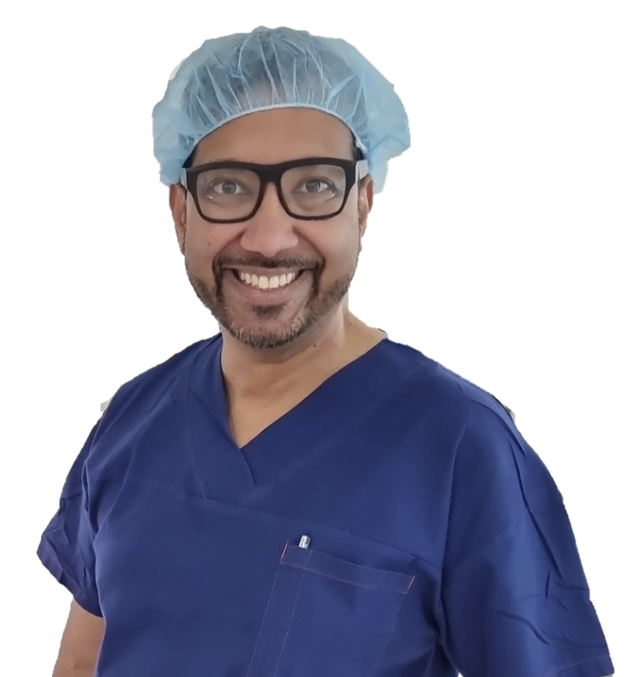
Dr Rohit Kumar (MED0001630444) is an ANZBCPS Board Certified specialist plastic surgeon with over 20 years of surgical experience. His main focus is body contouring after major weight loss, along with breast surgery and abdominoplasty. More about Dr Kumar.
Are you ready to book in with Dr Kumar?